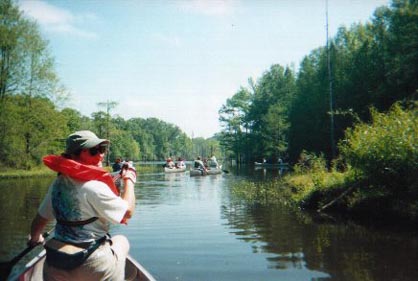
Martin Dies, Jr. State Park is a 705-acre recreational area in Jasper and Tyler Counties between Woodville and Jasper on B. A. Steinhagen Reservoir (15,000 acres). Visitors can enjoy camping, hiking, boating, canoeing, fishing, swimming, mountain biking and wildlife and bird watching. Canoe trips down the Angelina or Neches River are taken on the third Saturday of each month. Call the park at least one week in advance to make reservations. Locatedd at the edge of the Big Thicket National Preserve, the park is in the heavily-forested area known as the "East Texas Pineywoods." The park has numerous creeks, known as sloughs, and cypress, willow, beech, magnolia and sweet bay are common. Hiking trails provide excellent opportunities to view wildlife, including woodland warblers, woodpeckers, bluebirds, herons, wood ducks, cranes, and alligators, as the park is adjacent to Angelina-Neches-Dam B Wildlife Management Area. For reservations, call 512/389-8900. For more details, call the park or Park Information at 1-800-792-1112.
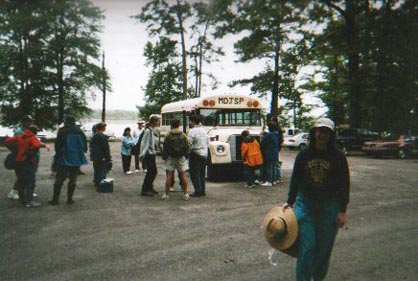 Preparing for early morning bus ride to put-in at Bevilport.
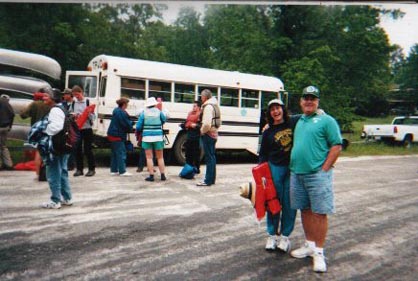 Debra poses with bus driver while we unload canoes.
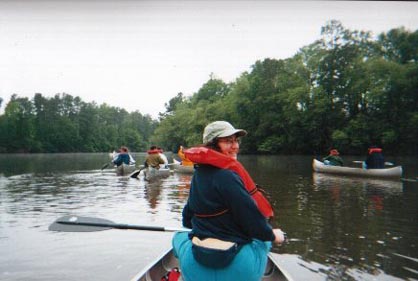 We are finally underway.
 The Angelina River was 100 yards wide at this point after heavy rains from the previous week.
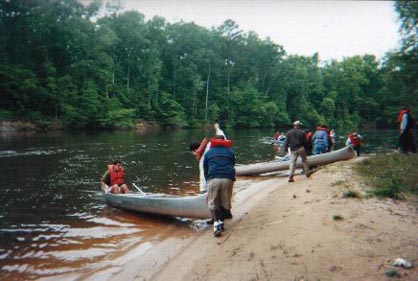 First rest break after 1 1/2 hours of beautiful river scenes and paddling.
 There are 20 people on each trip. They came from all over the state. One couple was from South Dakota, four guys from Europe.
We are leaving one of the "shortcuts" on the river. A couple of young guys from France swamped their canoe before this. Luckily, we were not in a wide swampy area of the river.
There are 20 people on each trip. They came from all over the state. One couple was from South Dakota, four guys from Europe.
We are leaving one of the "shortcuts" on the river. A couple of young guys from France swamped their canoe before this. Luckily, we were not in a wide swampy area of the river.
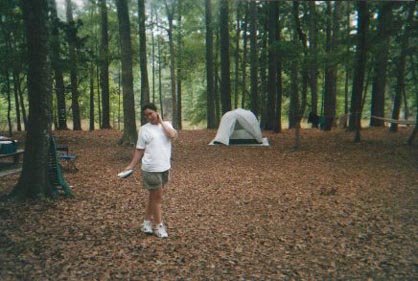 The "poser" at the campsite. This park has really widely-spaced campsites - some with "river frontage". We loved it!
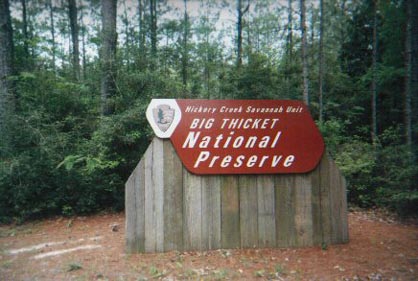 Entrance to one unit of the Big Thicket National Preserve.
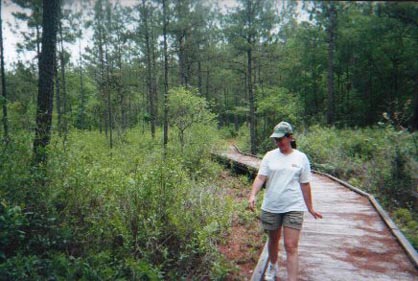 A really nice short little hike, we were searching for the carnivorous Pitcher Plants.
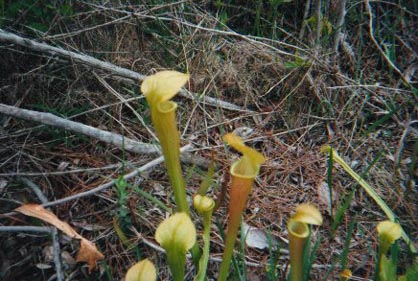 Four of the five carnivorous plants in the US are found in the Big Thicket. They occur in the wetland savannah because of the low mineral content of the soil.
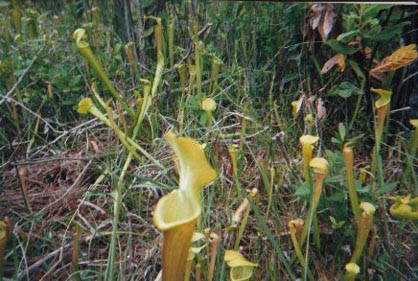 The carnivorous plants supplement their diet with nitrogen from the insects they capture. Pitcher plants have long, narrow funnel-shaped leaves dotted with nectar glands which attract insects to the opening.
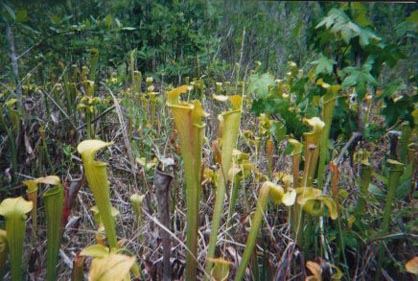 Once inside, the insects are prevented from escaping by long downward-pointing hairs. They are dissolved and absorbed into the plant.
 One last stop before heading home.

